
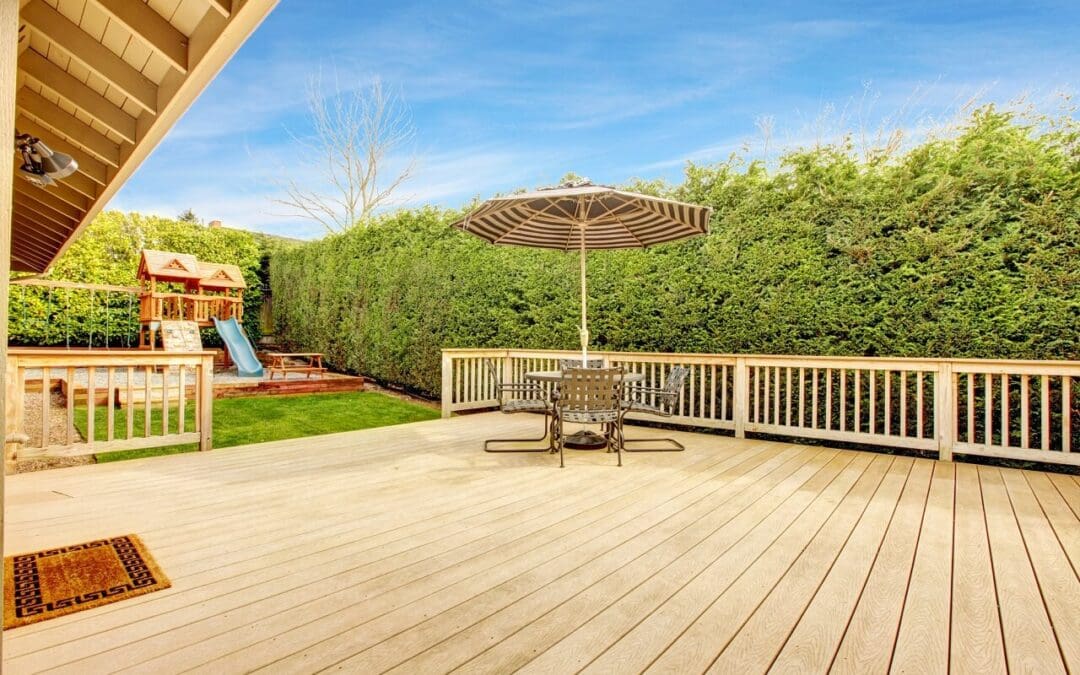
A deck is one of the most-used spaces in a home, and it’s also one of the most exposed. Sun, rain, snow, and constant foot traffic wear it down year after year, and a neglected deck could become a safety hazard long before it looks bad. The good news is that deck maintenance is straightforward when you break it into a few regular tasks. A few hours each year protects the wood or composite, keeps the structure sound, and extends the life of your investment. Here’s what to check, clean, and seal.
A Deck Maintenance Checklist for Structure and Safety
Start with safety. Check where the deck attaches to the house, since a failing ledger board is the most dangerous deck problem. Look for rot, rust, loose bolts, and missing or damaged flashing. From underneath, inspect posts, beams, and joists for soft spots, and poke suspicious areas with a screwdriver. Tighten loose screws, bolts, and nails, and replace corroded hardware. Shake the railings and the stair stringers. They shouldn’t wobble, and balusters should be spaced closely enough that a small child can’t slip through, generally under four inches. Check the footings for heaving or settling. If you find rot at the ledger, movement, or a deck that sways, stop using it and call a professional. Decks more than fifteen years old deserve extra scrutiny, since fasteners and flashing age and building practices have changed.
Clean the Surface Without Damaging It
Regular deck maintenance starts with sweeping debris out of the gaps between boards, since trapped leaves hold moisture and cause rot. Clean the surface once or twice a year with a deck cleaner or mild detergent and a soft brush. If you use a pressure washer, use low pressure, a wide fan tip, and stay a foot or more away from the wood, moving with the grain, because high pressure can splinter and gouge boards. Shaded areas tend to grow mildew and algae, which make the deck slippery. Composite decks usually need only soap and water. Rinse thoroughly, and move planters so moisture doesn’t collect under them. Keep rusty furniture and greasy grills off the deck, since they can leave stains that are hard to remove.
Protect Wood With Sealer: Deck Maintenance That Pays Off
For wood decks, sealer is the single best protection against weather. To check whether yours needs it, sprinkle water on the boards. If it beads up, the finish is working, and if it soaks in, it’s time to reseal. Clean the deck and let it dry completely, usually at least a day or two, before applying a sealer or stain in mild, dry weather. Semi-transparent stains with UV protection last longer in the sun. Apply with a brush or roller, following the label, and sand any rough spots first. Most decks need resealing every one to three years, and it’s a good time to replace any cracked or rotted boards. Choose products rated for your type of wood, and test in a hidden corner first so you can check the color. Let each coat dry as directed before walking on the surface.
Prepare the Deck for Winter
Before winter arrives, clear leaves and debris, trim back plants that touch the deck, and make sure the gutter above doesn’t spill onto it. When it snows, use a plastic shovel instead of a metal one, which can scratch the surface. Avoid rock salt, which can damage some decking and corrode fasteners, and use sand or a deck-safe ice melt. Move grills away from the house, and cover or store furniture and planters. Keeping the surface clear and dry through the cold months is the most useful deck maintenance you can do before spring. When spring arrives, repeat the structure check and look for damage the winter may have caused. Sweeping off leaves regularly also prevents stains and slippery mildew.
Frequently Asked Questions (FAQs)
How often should I seal or stain my deck?
Every one to three years, depending on sun, weather, and the product used. Use the water test each spring to decide whether it’s time.
Can I pressure wash my deck?
Yes, with low pressure and a wide tip, moving with the grain. High pressure can splinter wood and leave marks, so test a small area first.
How long does a deck last?
A wood deck can last fifteen to twenty years or more with regular maintenance, and composite decks often last longer. Structure and hardware matter as much as the boards.
What are signs of an unsafe deck?
Wobbly railings, soft or rotted boards, rusted hardware, and a deck that pulls away from the house are all warning signs. Stop using it until a professional checks it.
Do I need a permit for repairs?
Minor repairs often don’t require one, but structural work or replacing a ledger board may. Check with your local building department before starting.
Homeworx Services Inc. provides professional home inspections to homeowners and homebuyers in Northern Virginia. Contact us to request our services.